Search This Blog

Thursday, September 25, 2014

Facebook takes over WhatsApp. What is up to?

FACEBOOK TO WIN EU APPROVAL FOR $19 BLN WHATSAPP BID -SOURCES 

25-Sep-2014 18:04
·         European Commission did not demand concessions -sources
·         Deal will pit Facebook against telecoms industry
By Foo Yun Chee
BRUSSELS, Sept 25 (Reuters) - Facebook FB.O, the world's leading social network, will win unconditional EU approval for its $19 billion offer for mobile messaging startup WhatsApp in a deal pitting it against telecoms operators, two people familiar with the matter said on Thursday.
The landmark acquisition, the largest in Facebook's 10-year history, will give the company a firm foothold in the fast-growing mobile messaging market.
A plan by WhatsApp to add free voice-call services for its 450 million customers later this year, however, makes it a potentially powerful competitor to companies such as Deutsche Telekom DTEGn.DE, Telecom Italia TLIT.MIand Telefonica TEF.MC.
Analysts said the move is likely to hit telecoms providers' turnover as the industry heads into its fifth year of revenue decline. The sector had looked to EU regulators to extract concessions from Facebook.
Facebook convinced the Commission that the deal had no anti-competitive effect and, therefore, concessions were not necessary, the sources said.
"It's unconditional clearance," one of the people said, declining to be named because the decision by the European Commission was not yet public.
Commission spokesman Antoine Colombani declined to comment. The European Union competition authority has set an Oct. 3 deadline for its decision.
The deal does not seem to pose any competition problems as far as the Commission is concerned, said Tobias Caspary, a partner at law firm Fried Frank.
"Both parties are offering their services for free. It seems unlikely that customers are locked in with respect to instant messaging, and it would be relatively easy to switch to alternative offers, for example Skype or Line," he said.
"Also relevant factors looked at were probably that the entry barriers are relatively low for the instant messaging market, that this is still a nascent market characterized by rapid changes and growth, and that there are several recent entrants."
U.S. regulators gave the green light for the deal in April, telling WhatsApp to stick to its current privacy practices after the merger, including not to use users' personal data for targeted ads.
WhatsApp and its rivals such as KakaoTalk, China's WeChat and Viber have in recent years won over telecoms operators' customers with a free text messaging option, posing a serious threat to the sector's revenues from this business, which totalled about $120 billion last year, according to market researcher Ovum.

Thursday, September 11, 2014

MasterCard loses the appeal at ECJ and its consequences will be wide for the banking and the payments industries

As the result of the decision issued on 11 September 2014 by the European Court of Justice, MasterCard will have to cancel its multilateral interchange fees (MIFs), a situation which will put it at disadvantage with the competitor VISA, which chosed to settle the matter with the European Commission and received the possibility to apply such fees, capped at maximum 0,2 for debit cards and 0,3 fo credit cards.
MasterCard's decision to fight the Commission hits back and although limited to cross-border transactions, it will have wider consequences, as several investigations and legislative intiatives in the Member States aim to cut the level of the MIFs. 
With the ECJ decision, such attempts look already obsolete and now the tide is very much likely to turn towards a complete elimination of the MIFs, an outcome which will hit hard at the banks and the payment systems. 

Friday, July 18, 2014

The most important riddle of the summer: who will be the next Competition Commissioner?

Even as the summer reaches its highest season - and this can be seen all around us - the discussions on who will be appointed on which EU Commission job are also at reaching a peak. 
Unfortunately, the discussions surrounding the appointment are far from being transparent and even attention from the media is now low, due to the heat, the holidays and to the fact that most of the attention usually goes to the top job - that of President of the Commission – which is already settled. This is why I said that this is a riddle and not just a question. Behind the curtains, we are left guessing who might be in this and that position. 
However, there are several jobs where we hope that EU top politicians will nominate the best persons they can - the least politician of the politicians or the most technocrat of the technocrats, to be realistic! 
The Competition and State Aid position is one of the important jobs to be filled in over the summer. The next Commissioner is likely to have an even more difficult job than his predecessor - Mr.Almunia - who managed pretty well this area of the EU law and policy. There are several large challenges ahead for the to-be Competition Commissioner: the Google case (cases?), the Gazprom case, the enactment of the directive on private damages, as well as long disputed issues, such as those surrounding the way the decisions in antitrust matters are taken by the Commission, to mention only few of them. 
The selection looks more difficult than in the past - 2000 or 2008 - but not because of these challenges but due to other criteria, coming from the politics of the European Union. There are many persons who believe that the job will go to a Brit, in order to heal the wounds of the prime minister David Cameron, who lost his ill-fated battle for opposing Jean-Claude Juncker, and, hence, of UK as such, by assigning such an important job to a country on the verge to separate itself from the European Union.
I would be in favour of such a choice but not for the reasons listed above but because there is a higher chance that a person with a true belief in the market forces and in the free economy will take the position.  The European Union needs to re-discover its trust in the markets, which has been lost in past in the aftermath of the financial crisis, because of politicians who recklessly or purportedly put the crisis on the failure of the market forces rather than on their own mistakes and missteps. 
In a world where even the Chinese economy looks often more liberal than certain markets in the European Union and where there are ”tigers” of the economy in almost every region of the planet, the European Union must unleash the forces and the dynamism which accompany the market economy, rather than trying to put dams and plan the economic growth from offices in Brussels, London, Paris, Berlin or elsewhere. 
However, the (political) chances for a competition commissioner coming from London are rather slim (UK is more likely to receive a position of Vice-President of the Commission but in conjunction with another portfolio). 
The competition for the competition commissioner is more likely to take place between a person nominated by France (perhaps Pierre Moscovici) and the choice of Germany (the current Energy Commissioner Guenter Oettinger), with Germany keeping the highest odds. Mr.Oettinger is the only person who assumed directly and honestly his preference for becoming the next Competition Commissioner and he might be a decent choice for the job. 
Or we will witness a surprise - someone from the Eastern block?
Stay tune and watch! 


Wednesday, June 25, 2014

Articol Ziarul Financiar - 17 iunie 2014 - Statul face cadouri bogaților


OPINII PRIMITE LA REDACŢIE

Statul face cadouri bogaţilor

joi, 17:58Autor: Valentin Mircea
Acum câteva zile guvernul României, aceea instituţie care ar trebui să se ocupe de gestionarea a ceea ce aparţine statului, în folosul tuturor cetăţenilor săi, a emis o hotărâre de guvern prin care doar anumiţi operatori economici – cei numiţi generic ”marii consumatori” – să beneficieze de o reducere de până la 85% a numărului de certificate verzi pe care trebuie să le achiziţioneze. Guvernul consideră că aceasta este o formă de ajutor de stat care trebuie acordată deoarece în caz contrar ar exista câteva mari societăţi care vor închide porţile sau vor pleca din România.  Zice premierul că reducerea ajută câţiva mari angajatori ”să rămână competitivi şi să îşi scadă preturile si costurile (sic!) cu energia”.
Până aici totul este bun şi frumos. Dar dincolo de declaraţii şi intenţii lustruite frumos, detaliile hotărârii guvernului arată prost. Foarte prost.
Mai întâi este vorba de faptul că ”schema de ajutor de stat”, aşa cum este ea numită are valoarea deloc de neglijat de 750 milioane de EUR.  Aceşti bani nu vor veni, din câte ni se spune, de la bugetul de stat – care nu are oricum aceste fonduri – ci de la toţi ceilalţi privaţi: consumatori individuali şi toate companiile care nu se pot lăuda cu statutul de ”mare consumator”.  Adică, statul face cadouri unor privaţi din banii tuturor.  Sigur, bugetul de stat este constituit din banii tuturor dar măcar puteam vorbi de eficienţă şi responsabilitate în folosirea fondurilor publice. Fiindcă despre un cadou este vorba, nici vorbă de ajutor de stat, noţiune consacrată şi utilă economiei, având în vedere că aceasta este mai degrabă o investiţie a statului în anumite zone economice, în scopuri precis determinate, cu preocupare de a nu afecta/discrimina pe nimeni şi într-o modalitate în care banii alocaţi se întorc de fapt la stat sub formă de taxe, impozite şi contribuţii. În acest caz nu putem însă vorbi de un act chibzuit, determinat de calcule exacte şi de dorinţa de a menţine şi chiar dezvolta pe termen lung anumite sectoare industriale. Dacă asta ar fi fost intenţia, Ministerul Economiei ar fi venit la ”pachet” cu programe/politici publice de dezvoltare a respectivelor sectoare. Nu s-a întâmplat însă aşa iar singurul program a fost să fie acordate facilităţi unui număr restrâns de mari societăţi, cu un rol important, desigur, în economie.  Este interesant de remarcat că modul de acţiune al guvernului nu a fost apreciat nici măcar de cei care ar trebui să fie beneficiarii cadoului.  Asociaţia Marilor Consumatori a emis prompt un comunicat în care a semnalat problemele actului normativ, conştientă probabil că în forma anunţată ”schema de ajutor de stat” nu are nicio şansă reală să treacă de furcile caudine ale Comisiei Europene.  Oricum este imposibil ca o decizie din partea Comisiei Europene (aceasta este la final de mandat iar lunile iulie şi august sunt de vacanţă pentru funcţionari) să fie emisă până la 1 august 2014, data anunţată cu elan de către guvern. Să ne amintim de saga Oltchim, cu o situaţie mult mai gravă, dar în cazul căreia autorizarea de către Comisia Europeană a unui ajutor de stat mult mai mic decât acesta a avut loc după mai mult de 1 an de eforturi de convingere a executivului comunitar.
Dacă este vorba de facilităţi – şi de asta este vorba – pentru ca sprijinul pentru marii consumatori să nu fie de-a dreptul un cadou – desigur, inacceptabil  - ar trebui ca cei care beneficiază de acesta să îşi asume, la rândul lor, anumite obligaţii. Aşa s-a întâmplat de-a lungul timpului, de la facilităţile fiscale din celebra pe atunci Lege 35/1991 până la diversele forme de sprijin primite de mari investitori – Renault, Ford sau giganţii din software care angajează experţi români în IT la Bucureşti.   A fost vorba – şi ar trebui să fie la fel şi în acest caz – printre altele, de obligaţia de a menţine capacităţi de producţie deschise şi locuri de muncă pentru o anumită perioadă, după încetarea sprijinului, de efectuarea de investiţii în tehnologii mai eficiente şi cu un consum mai redus de energie electrică.  Ce obligaţii îşi vor asuma marii consumatori de energie şi ce minimă garanţie este luată de guvern, în numele statului român, că aceştia nu vor închide sau nu vor pleca oricum, după ce cadoul se va fi terminat iar ei vor trebuie să revină la condiţiile aplicabile tuturor celorlalţi? Riscă/îşi permite guvernul României să încarce facturile tuturor românilor şi ale tuturor celorlalţi operatori economici, pentru a ţine pe ”respiraţie artificială” giganţi despre care nu ştie dacă vor mai supravieţui după ce tubul de oxigen este înlăturat? Problemele marilor consumatori de energie nu sunt provocate atât de existenţa certificatelor verzi, cât mai degrabă de starea tehnică învechită a unei mari părţi a utilajelor acestora şi de poveri care ne afectează pe noi toţi, aşa cum este nivelul foarte ridicat al contribuţiilor de asigurări sociale.  Marii consumatori de energie sunt, în acelaşi timp – o spune şi primul-ministru în motivarea sprijinului acordat – şi mari angajatori iar costul forţei de muncă în ansamblul unei astfel de societăţi este la fel de mare – dacă nu mai mare – cu cel al energiei electrice. Şi atunci se pune – legitim – întrebarea: de ce mai bine nu reduce guvernul contribuţiile de asigurări sociale (se vorbeşte insistent de reducerea cu 5 puncte procentuale a contribuţiei angajatorilor dar nu se face nimic), reducere de care ar beneficia TOŢI operatorii economici?  
În total, o asemenea reducere a poverii fiscale ar avea mult mai mulţi beneficiari şi ar putea fi salvate mult mai multe locuri de muncă decât cele câteva zeci de mii din cadrul marilor consumatori de energie. Întrebarea de mai sus este în acelaşi timp o propunere. Guvernul are alternative şi cinstit şi obiectiv ar fi să le folosească, nu să acorde cadouri fără condiţii unui număr mic de companii şi, în plus, pe spinarea tuturor.  Genul acesta de haiducie pe invers nu merge şi nu este de acceptat în economia de piaţă a României. 
Valentin Mircea este senior partner la casa de avocatură Mircea Lawyers şi fost vicepreşedinte al Consiliului Concurenţei

Saturday, June 14, 2014

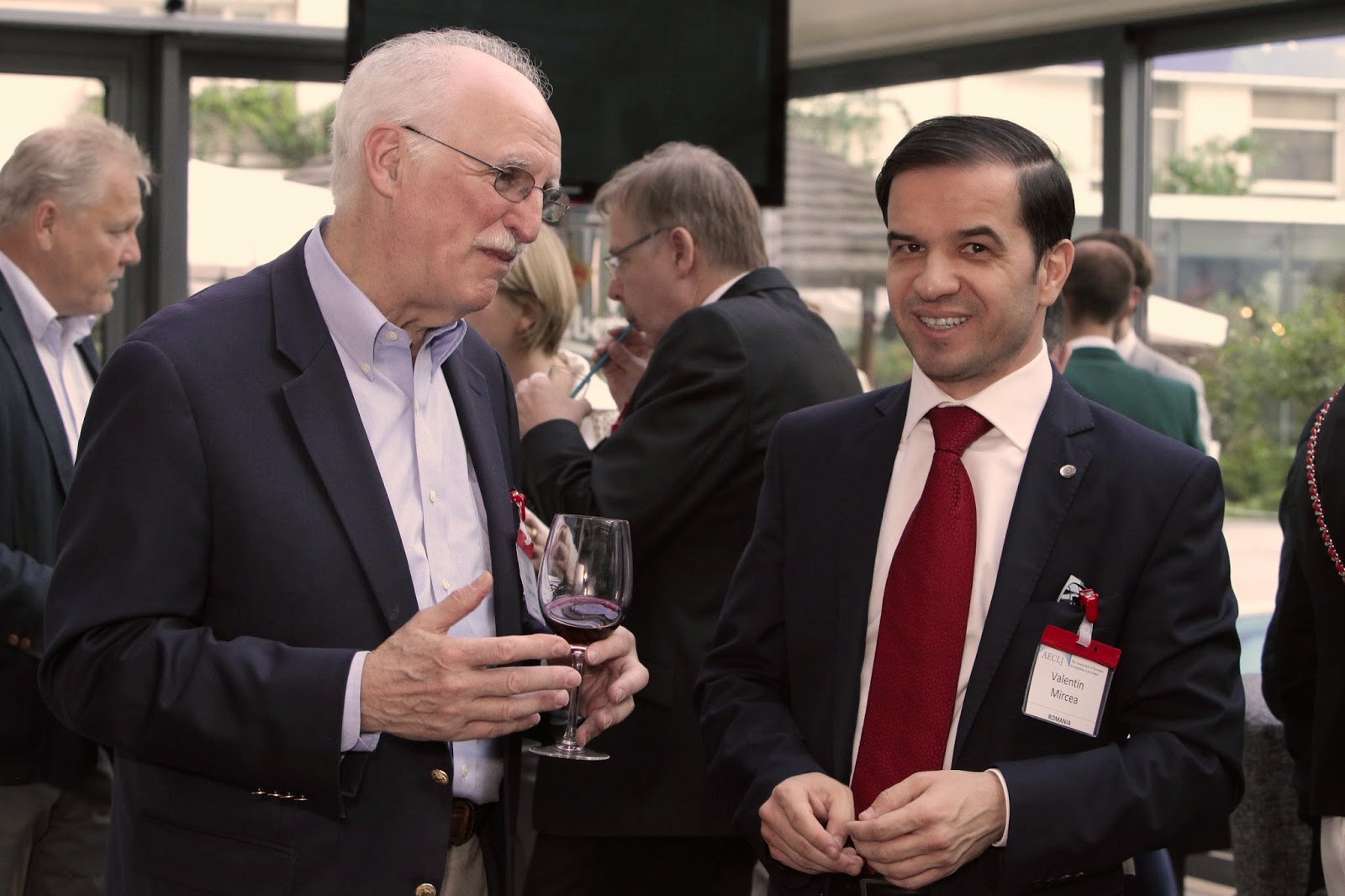
The Annual Conference of the Association of European Competition Law Judges - Bucharest - 13 June 2014

A very interesting conference focused on the mechanisms of the collective redress in the European Union - ”Collective Actions - Expectations and Perspectives”.
For the time being, just photos. More to come - including some thoughts and conclusions.